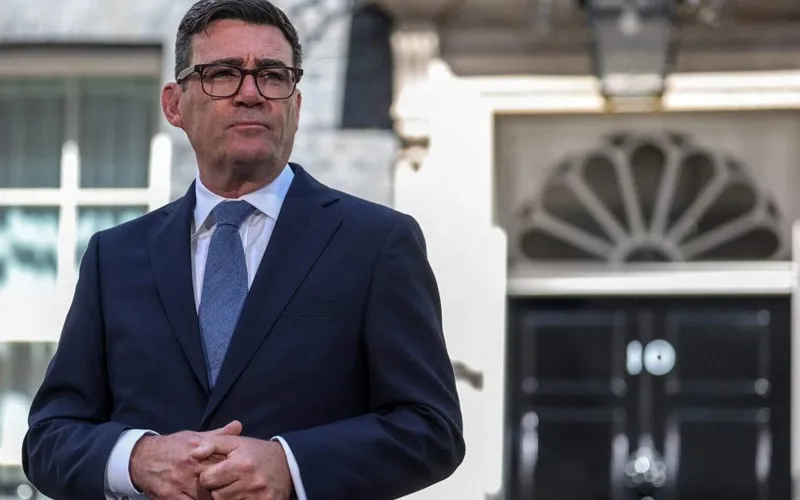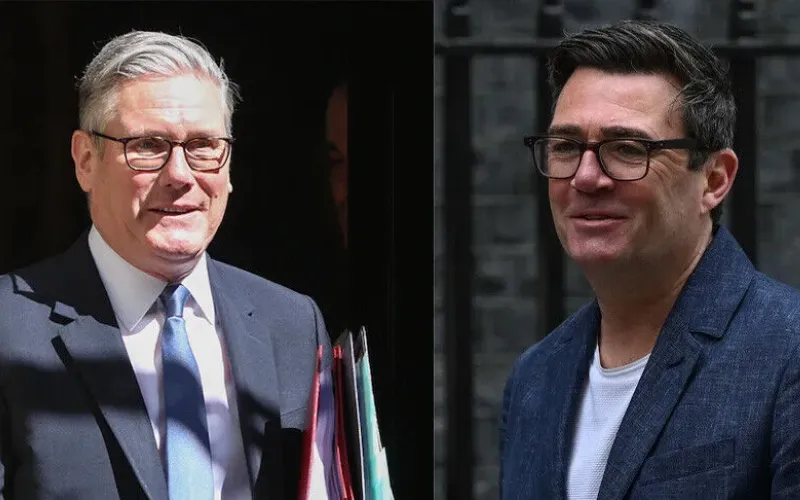
Andy Burnham became the United Kingdom’s seventh prime minister in the past decade, with investors and market watchers already questioning his policy agenda.
King Charles officially asked Burnham to form a government at Buckingham Palace before formally appointing him prime minister.
In his first speech after taking office, Burnham said, “We will make this moment a circuit breaker for Britain.”
U.S. President Donald Trump welcomed Burnham’s plan to speed up oil and gas exploration in already licensed North Sea fields.
Posting on Truth Social over the weekend, Trump described North Sea oil as “invaluable” and said it could transform the United Kingdom from a “poverty-stricken disaster” into one of the richest countries in the world.
The British economy has experienced slow growth in recent years. The country’s gross domestic product is expected to grow by just 0.8% in 2026, following growth of 1.3% in 2025 and 1% in 2024. High energy costs have increased pressure on the government to expand North Sea oil production while continuing efforts to achieve its net-zero carbon goals.
According to independent estimates compiled by the U.K. Parliament, new drilling projects and favorable conditions could increase domestic production to 7.5 billion barrels of oil equivalent.
Former Prime Minister Keir Starmer announced last month that he would resign after several policy reversals, controversy over staffing appointments and Labour’s poor performance in local elections led to growing pressure from within his own party. He officially stepped down earlier Monday.
Burnham had no challengers in the race to become leader of the governing Labour Party.
He returned to Parliament only a few weeks ago after winning a by-election in Makerfield, a constituency in northern England. Only sitting members of Parliament are eligible to run for the Labour Party leadership.
Before returning to Westminster, Burnham, often referred to as Labour’s “King in the North,” served as mayor of Greater Manchester, one of the United Kingdom’s largest metropolitan areas. Before becoming mayor, he served as a Labour member of Parliament and held Cabinet positions under former Prime Ministers Tony Blair and Gordon Brown.
Speaking to supporters Friday after becoming Labour leader, Burnham said, “I am ready.”
The prospect of Burnham, who is considered more left-leaning than Starmer, becoming prime minister had earlier unsettled the bond market. Investors in U.K. government bonds, known as gilts, generally favored Starmer and former Finance Minister Rachel Reeves because of their commitment to controlling public borrowing and government spending.
In his speech Friday, Burnham promised to address major issues such as social care and criticized changes made over recent decades, saying political power had become centralized while economic power had been privatized.
Mike Bell, head of market strategy at RBC BlueBay Asset Management, told CNBC that markets would likely be relieved if Burnham appoints Home Secretary Shabana Mahmood as chancellor instead of the more left-leaning Ed Miliband.
However, Bell added that once attention shifts from personalities to government policies, financial markets will closely examine every decision.
Andrew Wishart, senior U.K. economist at Berenberg, also told CNBC that markets currently appear fairly comfortable with Burnham’s policy agenda.
However, he said there is still concern that if Burnham’s current plans prove insufficient, his government could increase public spending, which could unsettle investors and negatively affect the United Kingdom’s economic outlook.