History rarely announces its turning points while they are unfolding. Most historically consequential transformations arrive disguised as regional crises, temporary disturbances, or limited wars.
Yet, every so often, a conflict emerges whose consequences extend far beyond the battlefield and begin re-arranging the mechanics of global power itself. The confrontation surrounding Iran increasingly appears to be one such moment.
What initially seemed another Middle Eastern military episode now carries the fingerprints of something much larger, the gradual dismantling of the post “Cold War Order” and the contested birth of a new strategic architecture.
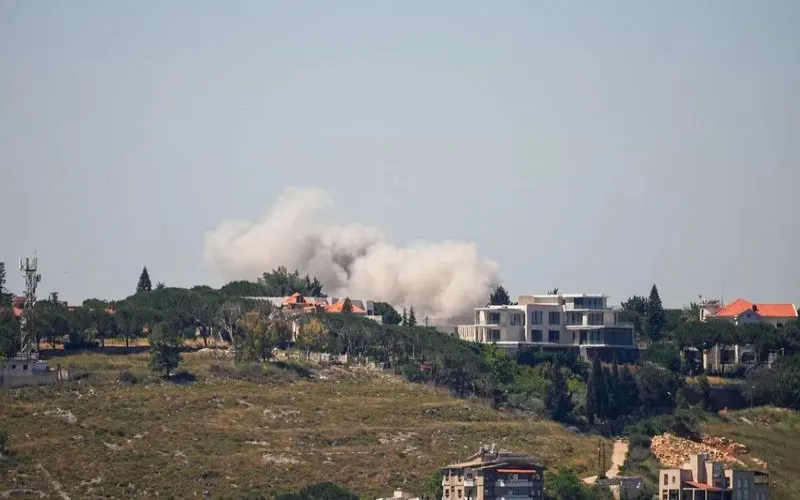
The war is no longer merely about Iran, Israel, nuclear capability, or maritime chokepoints. It is about leverage, energy, monetary power, technological sovereignty and ultimately, the redistribution of global authority.
The most revealing aspect of the crisis is not what governments publicly proclaim, but what their actions quietly betray.
For months, the dominant narrative projected to the world revolved around military punishment, deterrence, regime pressure and nuclear containment.
Yet beneath those official declarations, all principal actors behaved as if they understood a deeper reality, no decisive military victory was realistically attainable without consequences catastrophic enough to destabilise the entire international system. That realisation changed everything.
The conflict gradually transformed from a conventional geopolitical confrontation into a contest over endurance, economic vulnerability and strategic positioning within the emerging multipolar order.
And in that contest, Iran appears to have achieved something ex traordinary. Not necessarily military supremacy in the classical sense, certainly not territorial conquest, but something potentially more consequential, it demonstrated that a middle power, properly positioned within global energy arteries and backed indirectly by major Eurasian powers, can impose systemic costs upon the existing hegemon without needing outright battlefield superiority. That lesson will echo far beyond the Gulf.
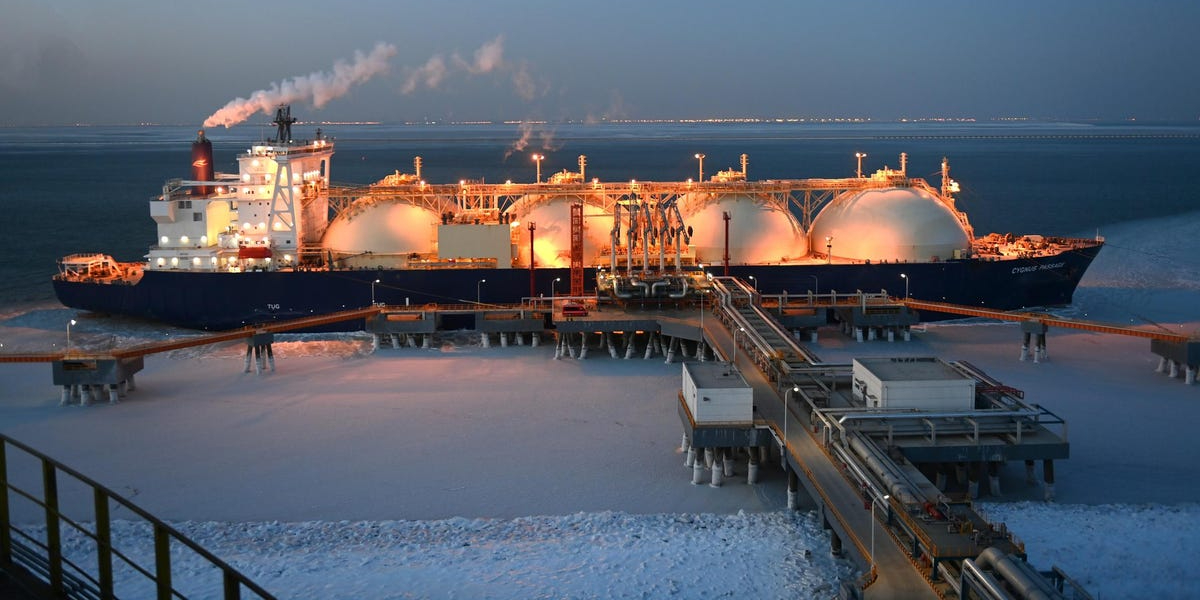
The real center of gravity in this conflict was never Tehran, Tel Aviv, or even Washington. It was the Strait of Hormuz.
Modern civilisation runs on uninterrupted energy circulation. The global economy, financial markets, industrial production chains, maritime insurance systems and political stability all pre-suppose one critical condition – predictability in energy movement. Once that predictability collapsed, the strategic equations changed overnight.
The closure or partial paralysis of Hormuz did not merely threaten oil shipments. It exposed the fragility of the very globalisation model built under American naval protection since the end of the Second World War.
For decades, the United States guaranteed maritime security not simply as a military function, but as the foundational infrastructure of the international economic system itself.
The present crisis exposed the uncomfortable possibility that such guarantees may no longer be absolute. That is why the psychological effects of this war may ultimately exceed its military effects.
The world’s major capitals are now silently recalculating assumptions they held for generations. Europe is reassessing dependency. Asian powers are reconsidering strategic hedging. Gulf monarchies are diversifying security equations.
Even allies who remain formally aligned with Washington are beginning to think in post American contingencies. This does not necessarily mean American collapse. Empires rarely disappear abruptly. Rather, they experience gradual erosion of uncontested authority. The more important development, is the fracture of monopoly over escalation.
Iran, despite sanctions, isolation and sustained pressure, demonstrated an ability to impose costs disproportionate to its conventional strength.
More significantly, it did so while operating within an informal strategic ecosystem increasingly linked to Russia and China. This triangular dynamic is perhaps the defining geopolitical reality of our time.
Russia contributes strategic disruption and military pressure against the Western order. China contributes industrial depth, financial resilience and long term systemic planning.
Iran contributes geographic leverage at the intersection of energy routes, ideological resistance networks and maritime pressure points. Together, they form not a formal alliance in the traditional NATO sense, but something potentially more adaptive, a convergence of revisionist interests.
The West continues to underestimate this because it still interprets global politics through the lens of alliances, treaties and declared blocs. The emerging order functions differently. It is transactional, layered, flexible and opportunistic.
That is why the recent interactions between Washington and Beijing carry extraordinary significance. Much public attention focused on tariffs, semiconductors, trade access and diplomatic optics.
Yet the composition of the American delegation itself suggested something deeper. When political leadership travels accompanied not merely by diplomats, but by the heads of finance, technology, manufacturing and capital markets, it signals that negotiations extend beyond ordinary bilateral disputes.
The gathering resembled less a conventional state visit and more an exploratory summit concerning the future operating system of global capitalism.
The comparison with the Plaza Accord of 1985 is, therefore, not entirely misplaced, though history never repeats itself mechanically.
Forty years ago, the United States confronted a rapidly ascending Japan whose export dominance threatened American manufacturing primacy. The solution involved coordinated monetary adjustments that ultimately reshaped Japan’s trajectory for decades.
China studied that history carefully. Unlike Japan, China possesses civilisational patience, centralised strategic continuity, immense domestic scale and increasingly sophisticated monetary planning. Beijing understands that direct currency appreciation against the dollar could damage its export architecture and social stability.
Therefore, China appears determined to avoid any arrangement resembling externally imposed financial capitulation. Instead, Beijing seems to be pursuing a subtler path, gradual systemic diversification away from exclusive dollar dependence without triggering outright global monetary panic.
Gold accumulation, commodity settlement systems, local currency trade arrangements, central bank coordination and digital payment infrastructures all point toward that direction. What is emerging may not be a sudden replacement of the dollar, but rather the slow dilution of dollar exclusivity. That distinction matters enormously.
The future monetary system may not have a single uncontested reserve anchor. Instead, the world could evolve toward overlapping financial spheres, dollar, yuan, commodities, gold linked instruments, regional payment networks and strategic barter systems operating simultaneously.
In such a world, power becomes fragmented rather than centralised and the implications seem profound. Inflationary pressures, asset repricing, supply chain regionalisation, strategic industrial policies and energy securitisation are no longer temporary disruptions. They are structural characteristics of the next era. The age of frictionless globalisation is ending.
What replaces it, may resemble a hybrid order, technologically interconnected yet geopolitically fragmented, economically interdependent yet strategically distrustful. This is why the present conflict cannot be viewed merely through military lenses.
Wars today are fought simultaneously across multiple domains, maritime chokepoints, sanctions regimes, reserve currencies, semiconductor access, supply chains, artificial intelligence, public narratives, financial markets, demographic resilience and technological sovereignty. Military operations increasingly serve as instruments within broader systemic competition rather than isolated campaigns. Even diplomacy itself has changed character.
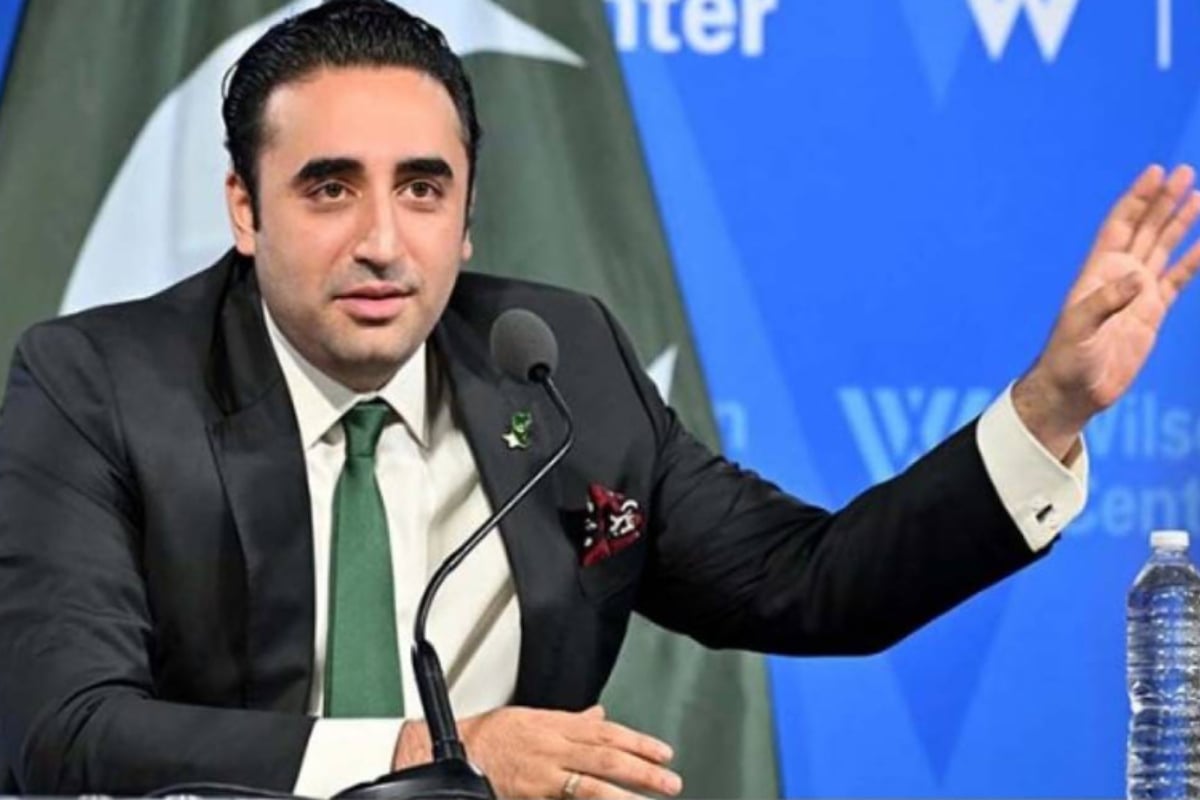
Pakistan’s mediation role is particularly noteworthy. Islamabad appears to recognise that in an increasingly multipolar environment, middle powers can gain strategic relevance not through alignment alone, but through brokerage.
By positioning itself as an intermediary between adversarial blocs, Pakistan seeks not only regional stabilisation, but also geopolitical elevation. This reflects a wider trend, the rise of intermediary states capable of navigating multiple power centers simultaneously. Turkey, Qatar, Saudi Arabia, India and others are pursuing similar strategies in varying forms. The old binary world is dissolving.
Yet the greatest transformation may still lie ahead. The true long-term consequence of this conflict may not be territorial or military.
It may be psychological. For decades, the global system operated upon assumptions of permanence, permanent American primacy, permanent maritime openness, permanent financial centrality of the dollar, permanent globalisation and permanent deterrence stability. Those assumptions are now visibly weakening. Once confidence in permanence erodes, nations begin preparing for volatility instead of continuity.
That transition changes everything, defense planning, industrial policy, reserve management, alliance behavior, technological investment and domestic political structures. We are entering an age where resilience may matter more than efficiency. And perhaps that is the clearest signal emerging from the Iran crisis.
This war may ultimately be remembered not for who fired first, who struck hardest, or who claimed tactical victories, but for revealing that the post 1991 unipolar moment has finally exhausted itself.
A new era is being negotiated in real time, sometimes through summits, sometimes through sanctions, sometimes through oil flows, sometimes through gold shipments and sometimes through wars that neither side can truly afford to win. The future world order will likely not belong entirely to Washington, Beijing, Moscow, or any single capital. It will belong to those who best understand transition itself and history suggests that periods of transition are rarely peaceful.
This article was written by Lt Gen Rizwan Akhtar (Retired).