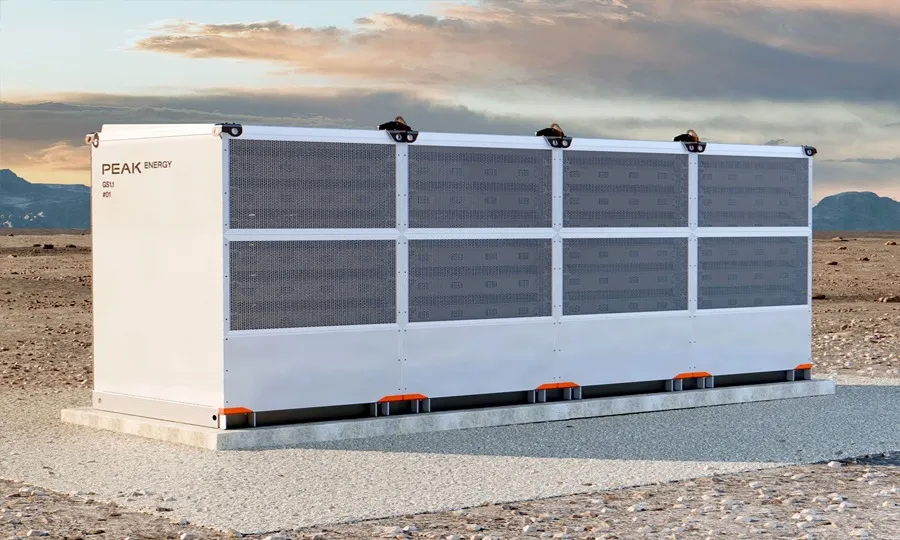
Chinese battery manufacturer CATL has unveiled what it describes as the world’s first field-validated sodium-ion battery energy storage system, marking a significant milestone in the commercialization of next-generation energy storage technology.
The company introduced the TENER Sodium Energy Storage System in Munich, Germany, on June 22, 2026, stating that the system has successfully passed real-world validation across technology, manufacturing, and supply-chain parameters, positioning it for large-scale deployment.
CATL confirmed that commercial deliveries will commence in China in September 2026, with cumulative shipments projected to reach 1 GWh by year-end, while international rollout is scheduled for June 2027.
The system offers more than 30 MWh of storage capacity through a modular architecture. Each unit weighs approximately 42 tonnes, with CATL noting that around 34 modules are sufficient to construct a 1 GWh-scale installation.
The design supports flexible deployment across multiple duration profiles, ranging from short-duration to long-duration energy storage applications.
A key feature of the system is its modular and service-oriented design, enabling operators to isolate and replace individual units without disrupting full plant operations an approach intended to enhance system availability and reduce lifecycle maintenance costs.
CATL stated that TENER Sodium is engineered for a projected operational lifespan of 25–30 years, with the capability to sustain up to 15,000 charge-discharge cycles at 25°C while maintaining 70% state-of-health.
The system is also optimized for extreme environmental conditions, operating reliably between -20°C and 45°C, with strong performance retention in low-temperature environments.
From a safety perspective, the company highlighted the inherent advantages of sodium-ion chemistry, including reduced thermal runaway intensity, lower gas generation, and significantly reduced peak surface temperatures compared to conventional lithium-ion systems.
To improve system performance, CATL has developed a dedicated bidirectional voltage regulation mechanism designed to stabilize output across variable operating ranges, enhancing round-trip efficiency by approximately 2%.
The system further integrates advanced thermal management and airflow optimization, reducing auxiliary energy consumption to nearly 1%, compared to the industry average of approximately 2%.
CATL also noted reduced acoustic output, making the system more suitable for deployment in proximity to urban and industrial zones.
Strategically, CATL emphasized that sodium-ion technology offers a scalable alternative to lithium dependency, citing sodium’s wide availability, supply-chain resilience, and potential cost advantages as key long-term benefits for grid-scale storage applications.
The company, which has invested in sodium-ion development since 2016, said it has built extensive intellectual property portfolios and established large-scale production capabilities, with multiple high-capacity manufacturing lines already operational or under expansion.
CATL added that sodium-ion and lithium-ion technologies are expected to operate in parallel, jointly supporting global energy transition needs driven by renewable integration and rapidly growing electricity demand from advanced digital infrastructure.