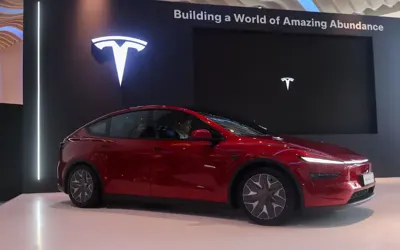
Tesla has launched its long-awaited Cybercab robotaxi in limited areas of Austin, Texas, introducing a futuristic two-seat vehicle designed to operate without a steering wheel or pedals.
The electric vehicle is fully autonomous and does not include traditional driving controls, meaning passengers can simply sit back while the car handles the journey without a human driver.
Tesla initially unveiled the Cybercab in 2024 as part of its plans to expand its driverless transportation network. The company has now begun offering rides to the public in selected areas of Austin through its Robotaxi service.
The rollout remains limited as Tesla works to expand its autonomous fleet. U.S. safety regulators are also evaluating the deployment, particularly because the Cybercab lacks features traditionally required in vehicles, including a steering wheel and pedals.
Tesla has not yet provided full details about the broader commercial rollout or when the Cybercab will become widely available for purchase. The company is expected to expand its robotaxi operations to additional locations as regulatory and operational requirements are addressed.
Earlier, Britain’s new-car market recorded its strongest August in eight years, with registrations rising about 13% to more than 90,000, while battery electric vehicles accounted for roughly 30% of sales, preliminary industry data showed Friday.
The increase comes as automakers face pressure to expand electric vehicle sales and meet Britain’s zero-emission vehicle target for 2026.
The Society of Motor Manufacturers and Traders said battery electric vehicles, or BEVs, increased their share of the market to about 30% in August. For the year to date, BEVs accounted for 26% of new-car registrations.