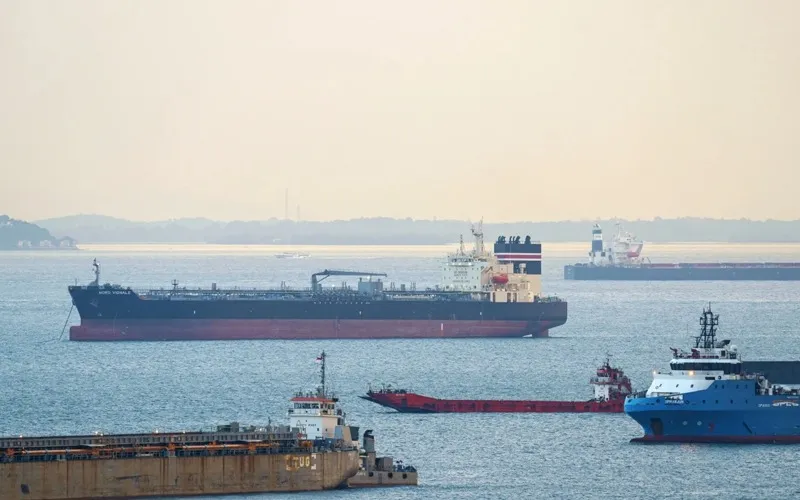
LONDON: Oil tanker operators are earning record profits as freight rates on key Middle East routes surge sharply, with shipping costs through the Strait of Hormuz and wider Gulf nearly doubling amid rising crude demand and a gradual return of maritime traffic, industry sources said.
The spike in earnings comes as vessel availability tightens across the region, with charter rates for tankers operating outside the Strait jumping to around $190,500 per day from $106,500 just a week earlier.
Analysts say the sudden rise reflects a squeeze in supply as Middle Eastern exporters ramp up shipments while shipping lanes slowly reopen.
Despite the recovery in traffic, movement through the strategic waterway remains significantly below normal levels. Following recent tensions and a subsequent ceasefire agreement between Iran and the United States, shipping has resumed but remains far short of the pre-crisis daily average of around 125 vessels.
Read More: Iraq, UAE race to replace Hormuz oil capacity as Gulf chokepoint risks grow
Market estimates suggest nearly 100 tankers are still stuck inside the Gulf with cargo onboard, adding pressure to an already tight market.
The shortage has driven earnings for very large crude carriers (VLCCs) to unprecedented levels, with daily returns for Gulf-bound voyages through Hormuz climbing to nearly $470,000 an increase of more than $50,000 in just one week, according to shipbroker estimates.
Shipping analysts say tanker owners are positioning for a potential surge in Middle Eastern crude exports. Brokerage firm Clarksons noted that despite earlier disruptions, spot earnings have remained unusually strong, highlighting persistent tightness in global vessel supply.
Middle Eastern producers, including Abu Dhabi National Oil Company (ADNOC), have also boosted crude offerings through a series of tenders, encouraging buyers to lift cargo directly from Gulf terminals and further fueling demand for tankers.
While freight rates continue to climb, war risk insurance costs have eased over the past five days, dropping to around 3% of a vessel’s value from nearly 5% a week earlier. Industry sources say this shift could reduce voyage costs by hundreds of thousands of dollars per shipment.
In South Asia, refiners including India’s Reliance Industries have reportedly resumed sourcing crude from the region as supply disruptions persist. The company did not comment on the development.
Despite the current boom, analysts caution that the tanker market remains highly sensitive to geopolitical shifts, with volatility expected to continue as negotiations over a longer-term regional settlement progress.