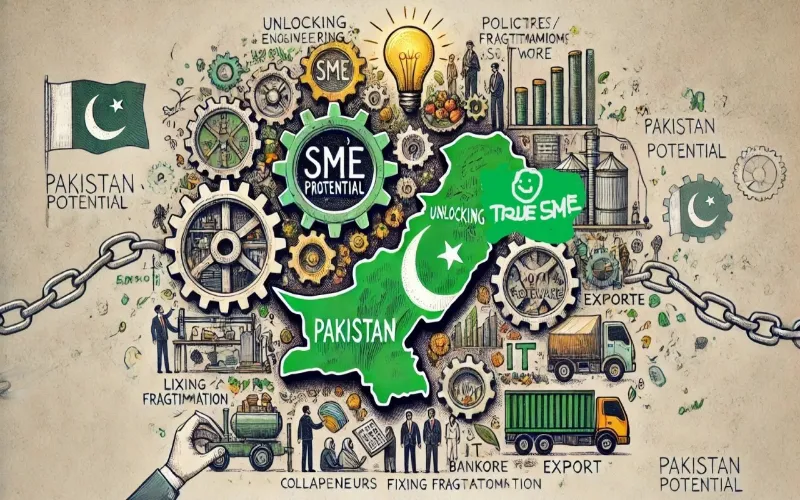
KARACHI: The government has announced the establishment of a dedicated SME Finance Task Force to improve access to loans for small and medium enterprises (SMEs) and increase private sector lending.
Federal Minister for Finance and Revenue Senator Muhammad Aurangzeb announced the initiative during the Pakistan Banking Summit 2026 in Karachi on Tuesday, July 7.
The task force will be led by the State Bank of Pakistan (SBP) and include representatives from the Pakistan Banks’ Association, Small and Medium Enterprises Development Authority (SMEDA), business chambers and the Ministry of Finance.
The group will recommend practical steps to expand SME financing and make credit more accessible through the banking sector.
Speaking at the summit, Aurangzeb said increasing loans for SMEs, exporters, agriculture, manufacturing, construction, housing and the information technology sector is essential for sustainable economic growth.
View this post on Instagram
He said financing for SMEs should become an industry wide priority instead of relying on only a few financial institutions.
The finance minister also highlighted Pakistan’s improving economic conditions, including a stronger fiscal position, lower deficit, stable current account performance, higher remittances, growing foreign exchange reserves and renewed access to international capital markets.
Aurangzeb said the government aims to convert economic stability into long term export led growth through reforms and consistent policies.
He added that the Federal Budget FY27 includes measures to improve business competitiveness, encourage investment and support key sectors, including exports, agriculture and manufacturing.
The minister also said the government is working to modernize tax administration through technology to improve transparency, reduce manual processes and build trust between taxpayers and authorities.
He further emphasized expanding risk sharing and credit guarantee programs for SMEs and small farmers while supporting export focused industries.
Aurangzeb said Pakistan also needs to develop non-bank financing channels and strengthen domestic debt markets to reduce pressure on banks and create more room for private sector lending.
The finance minister highlighted broader financial reforms, including privatization, climate finance, digital assets and financial innovation.
He said the recently introduced Virtual Asset Act 2026 provides a regulatory framework for digital assets, while the government is exploring new financing tools, including the tokenization of sovereign debt.
Aurangzeb also stressed the importance of improving cybersecurity to support Pakistan’s growing digital financial system.
He concluded by reaffirming the government’s commitment to working with banks and other stakeholders to build a modern, inclusive and resilient financial sector that supports investment and economic growth.