WASHINGTON/UNITED NATIONS: The United States has reaffirmed its support for Pakistan’s right to defend itself against terrorist attacks, as divisions among UN member states ended nearly two decades of consensus on the world body's global counterterrorism strategy.
“The Pakistani people have suffered greatly at the hands of terrorists,” the US State Department said, adding that Washington “supports Pakistan’s right to defend itself against terrorist attacks” amid ongoing security tensions along the Pakistan-Afghanistan border.
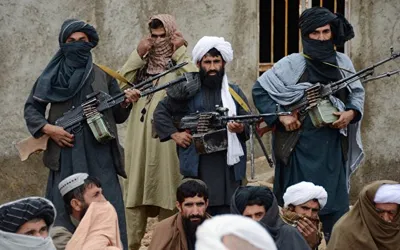
The statement followed Pakistan’s operation Sunday night against what it described as terrorist infrastructure along the Afghan border, conducted after an attack on a Pakistan Rangers Sindh headquarters in Karachi’s Gulistan-i-Jauhar area.
The US has expressed similar support in recent months. In February, Under Secretary of State for Political Affairs Allison Hooker said Washington continued to closely monitor the situation and backed Pakistan’s right to defend itself against attacks by militant groups.
The remarks coincided with the ninth review of the United Nations Global Counter-Terrorism Strategy, a framework adopted in 2006 to guide international cooperation against terrorism.
For the first time, the strategy was approved through a recorded vote rather than by consensus after member states failed to bridge differences during negotiations.
The United Nations General Assembly adopted the revised strategy on July 1 by a vote of 140-3, with Pakistan among those voting in favor.
The United States, Israel and Argentina voted against the resolution, while Japan initially abstained before saying its vote resulted from a technical error and that it had intended to support the measure.
Washington criticized the document as “bloated, outdated, and lacking focus,” arguing that its more than 170 paragraphs diluted key counterterrorism priorities and failed to address U.S. policy concerns.
Israel described the text as outdated and repetitive, while Argentina said its opposition was intended to encourage a broader review of the strategy.
Pakistan, Egypt, Iran and several members of the Organisation of Islamic Cooperation expressed disappointment that proposals submitted by Islamic countries were not adequately reflected in the final document.
Türkiye also said the strategy should have more strongly condemned attacks targeting Muslims, including the desecration of mosques and the burning of the Quran.
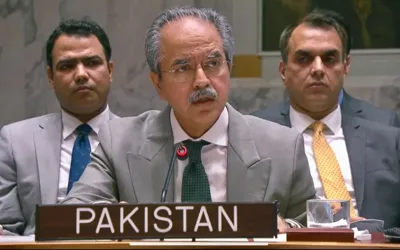
Addressing the General Assembly, Pakistan’s Permanent Representative to the United Nations, Asim Iftikhar Ahmad, said terrorism had become an increasingly interconnected and evolving global threat that required a comprehensive international response.
He said Pakistan had remained at the forefront of global counterterrorism efforts, participating in operations against al-Qaida and other militant groups while suffering significant human losses. More than 1,200 Pakistanis were killed in terrorist attacks over the past year, he said.
The ambassador said the latest review failed to address longstanding shortcomings in the strategy or incorporate key concerns raised by the Organisation of Islamic Cooperation despite years of negotiations.
He called for a broader multilateral approach that addresses emerging physical and online threats, unresolved conflicts, respect for human rights and the rule of law, and the right to self-determination under international law.
Ahmad also urged stronger international action against xenophobia, racism, violent extremism and online radicalization, while calling for reforms to the UN's counterterrorism architecture and sanctions system to make them more transparent and less vulnerable to political influence.
He further advocated tighter oversight of social media platforms, digital financial systems, virtual assets and cryptocurrencies to prevent their exploitation by terrorist organizations, and said international watchdogs such as the Financial Action Task Force should remain impartial and free from political influence.
More read, UN must black list global terror threat BLA
Describing the lack of consensus as a “wake-up call,” Ahmad said the outcome underscored the need for renewed international cooperation to confront evolving terrorist threats.