WASHINGTON: The Federal Reserve raised its benchmark interest rate Wednesday for the first time in more than three years, increasing it by a quarter percentage point to 3.75%-4% as inflation remains above its 2% target.
The Federal Open Market Committee approved the increase unanimously, moving the federal funds target range from 3.5%-3.75%. It was the Fed’s first rate increase since July 2023.
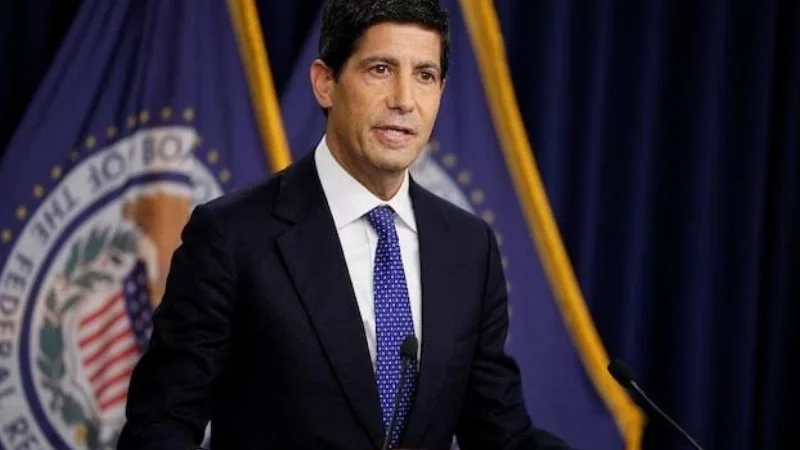
Fed Chair Kevin Warsh said inflation remains too high and has not improved enough to ease concerns about price pressures.
“Inflation is too high and has been for too long,” Warsh said, calling the rate increase a “sober” and “responsible decision.”
The Fed said the U.S. economy continues to expand at a solid pace, with resilient domestic spending, strong productivity growth and robust capital investment. It added that job gains have kept pace with the workforce while the unemployment rate has changed little.
The higher federal funds rate can increase borrowing costs across the economy, particularly for consumers taking out new loans or carrying balances tied to variable interest rates.
Credit cards, personal loans and some business loans can become more expensive as banks adjust rates following the Fed's decision. Higher interest rates can also encourage saving by increasing returns on some deposit accounts.
Mortgage rates, however, do not move directly with the federal funds rate. People with existing fixed-rate mortgages generally will not see their monthly payments change because of Wednesday's decision, while those seeking new mortgages or refinancing could face different borrowing costs.
The Fed's latest economic projections show inflation remaining above its 2% target for several years. Policymakers projected personal consumption expenditures inflation at 3.7% in 2026, 2.3% in 2027 and 2% in 2029.
The projections also pointed to another possible rate increase in 2026, although Warsh did not provide specific guidance on the future path of interest rates.
Warsh said the central bank cannot directly control individual prices, including oil and food, but can use monetary policy to prevent temporary price shocks from becoming broader and more persistent inflation.
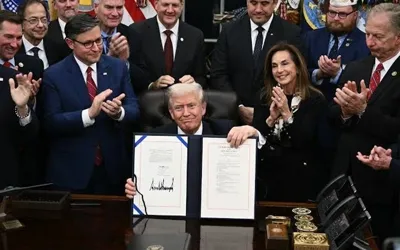
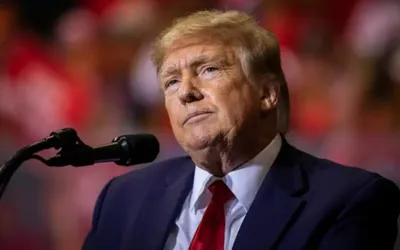
President Donald Trump has repeatedly called for lower interest rates and criticized the Federal Reserve's approach. After Wednesday's decision, Trump said he was relying on Warsh but described the Fed board as “hostile” and “very political.”
Trump has argued that lower borrowing costs would support the U.S. economy, while the Fed has emphasized its responsibility to maintain price stability and support maximum employment.
Higher interest rates are generally used to slow inflation by making borrowing more expensive and encouraging saving. However, tighter monetary policy can also weigh on consumer spending and business investment, potentially slowing economic growth.
The latest rate increase comes amid elevated economic uncertainty, including geopolitical developments that could affect energy prices and inflation. The Fed said such uncertainty remains part of its economic outlook.