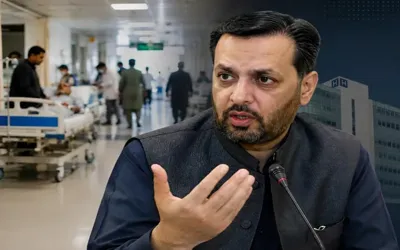
ISLAMABAD: Federal Health Minister Mustafa Kamal on Thursday reviewed trials of a two-dimensional (2D) barcode system aimed at eliminating counterfeit medicines across Pakistan.
The meeting was attended by the chief executive officers of the Drug Regulatory Authority of Pakistan (DRAP) and the National Information Technology Board (NITB).
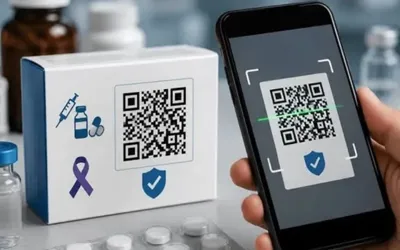
The DRAP chief executive briefed the minister on the implementation of 2D barcodes and serialization, a system that assigns unique identification codes to individual medicine packages to improve traceability.
Mustafa Kamal said the Ministry of Health was determined to eliminate counterfeit medicines from across the country.
The ministry has been working for the past 18 months to introduce the barcode system for medicines. Under the announced requirements, all medicines manufactured after Oct. 9 must carry a 2D barcode.
Local and multinational pharmaceutical companies will be required to include the barcode and serial number on medicines manufactured from Oct. 10. Imported medicines will also not be allowed to be sold across the country without the required 2D barcode.
DRAP has completed relevant training for pharmaceutical company representatives and other stakeholders to facilitate the system's implementation.
Under the new system, consumers will be able to use a mobile application to verify whether a medicine is genuine or counterfeit. The application will also provide information about a medicine's price and expiry date.
Pharmacies, medical stores and members of the public will be able to use the application to authenticate medicines.
The barcode system will also be extended to veterinary and poultry medicines. The ministry said medicines used for animals were directly linked to human health.