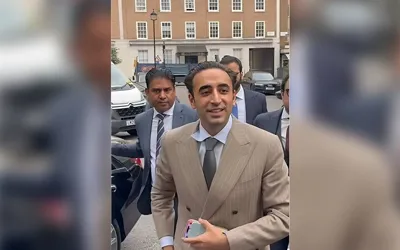
LAHORE: Pakistan's government will keep its petrol subsidy scheme running for up to 10 months if needed, Petroleum Minister Ali Pervaiz Malik said Sunday, as the country grapples with high fuel prices tied to conflict in the Middle East.
Speaking to reporters in Lahore, Malik said the government understands the hardship facing the public and would pass on to consumers any drop in international oil prices.
"The petrol subsidy scheme will be continued for the public if it has to run for 10 months," he said.
He said the government is spending between 35 billion and 40 billion rupees a month on the program, which has drawn more than 6 million registrations.
Malik said Pakistan has more than 25 million motorcycles that are about 20 years old. He said the government would continue the subsidy until the end of the war, if required, to shield the public from its effects.
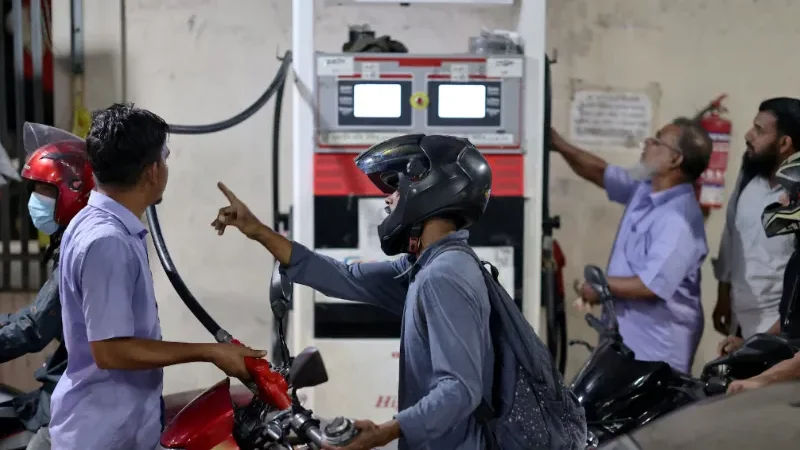
Prime Minister Shehbaz Sharif announced the scheme on Sept. 13. It offers 100 rupees off each liter of petrol for motorcycles, rickshaws, Qingqi rickshaws and cars with engines up to 800cc. Two- and three-wheeler users are eligible for 20 liters of subsidized petrol a month, while owners of vehicles up to 800cc are eligible for 30 liters.
Registration is done by SMS, and the prime minister's office has said it is free. Eligible users then request a fuel token before each fill-up, and the token is verified at the pump. The program took effect in the capital, Islamabad, on Sept. 14-15 and nationwide on Sept. 16-17.
Sharif has since widened eligibility. Vehicles registered after Jan. 1, 2006, now qualify, extending relief to more low- and middle-income transport users.
Malik thanked petrol pump owners for passing on the subsidy without charging extra fees.
He said the government would not repeat the mistakes of the previous administration, which he claimed announced relief without adequate preparation and brought the country close to default.
Malik also clarified remarks he made last week that petrol prices could reach 1,000 rupees a liter. He said they were taken out of context and that he meant price controls would become hard to maintain if fuel ran short.
"Due to the prime minister's better decisions, there will be no petrol shortage in Pakistan," he said, adding that the government is monitoring the situation closely.
The subsidy comes as the energy market is under strain from conflict in the region. The U.S.-Iran conflict has pushed global oil prices higher, while attacks from Yemen on Saudi energy facilities have added a fresh source of market risk. Trade through the Bab al-Mandab strait, a vital route for Saudi oil exports, also faces a growing threat from Houthi rebels, on top of the crisis in the Strait of Hormuz.
Pakistan is especially exposed to such shocks. The country imports around 90% of its petroleum requirements. The government continues to levy 114 rupees a liter in taxes and duties on petrol.
The current scheme is not Pakistan's first subsidy in response to rising fuel prices.