WASHINGTON: Tensions between the United States and Iran escalated sharply Tuesday as U.S. forces destroyed five Iranian oil tankers and Tehran retaliated with missile strikes on U.S. targets in Jordan, raising fresh concerns about shipping and energy supplies across the Gulf.
The U.S. military said the strikes on the tankers came after Iran’s Islamic Revolutionary Guard Corps targeted a U.S. Navy warship with ballistic missiles. U.S. Central Command, or CENTCOM, said the warship successfully evaded the attacks and that no American personnel were injured.
Four of the tankers were struck in the Gulf of Oman, while a fifth was targeted near Kharg Island, Iran’s main oil export terminal. CENTCOM said the vessels were part of a multibillion-dollar “shadow network” that helps finance the IRGC and its regional proxies.
One of the tankers, the M/T Riesco, sank in the Gulf of Oman after the U.S. strike, according to CENTCOM. The command released video showing the damaged vessel.
The attacks prompted an immediate response from Tehran. Iran launched ballistic missiles toward a U.S. military base in Jordan, according to Iranian state media.

Jordan’s military said its air defenses intercepted 18 of the 20 missiles, while the other two landed in unpopulated areas. Jordan reported no casualties from the attack.
Iran’s Revolutionary Guards also said Wednesday that they had attacked 10 vessels in the Strait of Hormuz, including two U.S. vessels and eight oil tankers. The Guards described the targeted ships as vessels attempting to cross an area Iran had declared unsafe, according to state media.
The latest exchange represents another major escalation in a conflict that has increasingly threatened military assets, commercial shipping and energy infrastructure across the region.
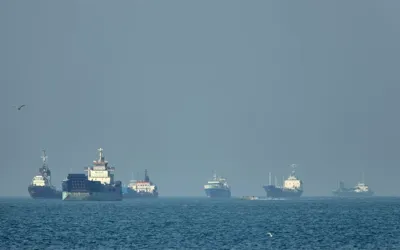
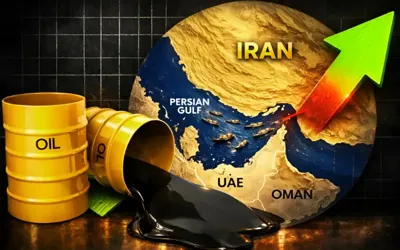
The Strait of Hormuz has become a particular flashpoint. The narrow waterway between Iran and Oman is one of the world’s most important oil transit routes, making any disruption there a potential threat to global energy markets.
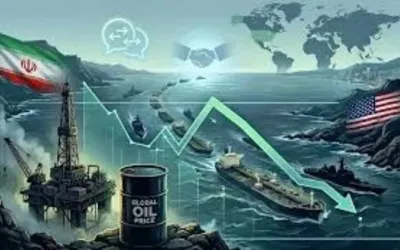
Oil prices rose as investors assessed the risk of further disruptions. Brent crude moved closer to $100 a barrel, while U.S. crude also gained, reflecting growing concerns over the security of regional oil supplies and shipping routes.
Shipping through the Strait of Hormuz has also slowed. Preliminary data showed only six commodity vessels transited the waterway Tuesday, compared with a 10-day average of 12, highlighting the impact of the escalating conflict on commercial traffic.
Kharg Island is particularly important to Iran’s energy sector. The heavily industrialized island, located off Iran’s coast, is home to the country’s main oil export terminal, with crude transported there from the mainland through pipelines before being loaded onto tankers.
The latest confrontation also comes amid attacks elsewhere in the Gulf. Yemen’s Iran-backed Houthi movement launched drone and missile strikes against Saudi Arabia on Tuesday, targeting energy facilities and civilian infrastructure.
Saudi authorities said the attacks injured 73 people and caused fires at oil facilities and other installations. The strikes temporarily disrupted operations at some affected sites, according to Saudi Arabia’s military and Energy Ministry.
The attacks have added to concerns that the widening conflict could damage critical energy infrastructure and further restrict oil shipments from the region.
U.S. Secretary of State Marco Rubio defended the tanker strikes, saying Washington would continue responding to Iranian attacks on American naval forces.
“Iran continues to try to hit U.S. naval ships. And, for every time they do that or try to do that, they’re going to lose tankers,” Rubio told reporters during a trip to Colombia. “And I think you’ll see that again today.”
The U.S. strikes came hours after Iran’s navy claimed it had seized an uncrewed U.S. underwater vehicle in the Strait of Hormuz, adding another potential flashpoint to the confrontation.
U.S. Navy Capt. Tim Hawkins, a CENTCOM spokesperson, said the vehicle had malfunctioned more than a day earlier and was being used to survey regional waters in support of ongoing operations.
Hawkins described it as an older model that did not collect sensitive data or carry classified sonar or radar equipment. He said U.S. operations in regional waters were continuing.
The latest attacks have shattered a period of relative calm and pushed the conflict back toward open confrontation, with military strikes now affecting naval forces, commercial tankers and energy facilities. The escalation has increased fears that further attacks could disrupt one of the world’s most important oil-producing regions and deepen pressure on already volatile global energy markets.