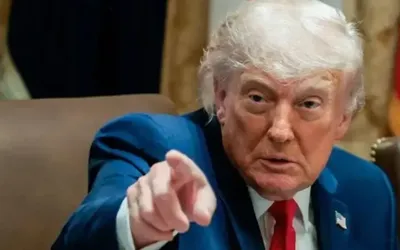
Shares of Nvidia fell more than 4 percent on Monday, even as the broader market rallied sharply, after CEO Jensen Huang admitted to an affair with a businesswoman alleged to be a Chinese spy, raising questions about his future at the world's most valuable chipmaker.
Huang, 63, acknowledged the affair in a message to staff on Sunday and said the board was launching an investigation into whether he was targeted by a foreign intelligence agency. The board said it had "confidence in Jensen" and no reason to believe national security or company secrets were compromised.
The New York Times first reported that the woman, Alice Huang, who is not related to the CEO, was working for China's Ministry of State Security, citing people briefed on intelligence circulated within the Trump administration in the spring. China's Foreign Ministry called the allegation "slander" and a smear.
Alice Huang, also known as Huang Le, is the controlling shareholder of Singapore-based cloud-computing company Megaspeed International, which Nvidia lists as an official cloud partner. Megaspeed has been under US investigation over whether it helped Chinese customers obtain advanced Nvidia chips subject to export controls. Reuters said it could not independently verify the intelligence allegation.
US President Donald Trump, a close ally of Huang, said the FBI was looking into the matter. "I think that he'll be in good shape," Trump said, adding that Huang told him he had no idea the woman was a spy.
Nvidia says Huang will continue to lead the company during the probe, but the pressure is mounting. Shareholders filed a proposed class action on Monday, accusing the company and Huang of concealing his ties with the woman. Leaders from both parties are demanding briefings, while Democrats called for investigations and fresh legislation to stop advanced AI chips from reaching China's military. House Democratic leader Hakeem Jeffries urged passage of a defense bill that restricts chip sales to China.
Analysts said the bigger worry is who would take over if Huang were forced out. "Jensen is Nvidia. Nvidia is Jensen," Stacy Rasgon of Bernstein told CNBC.
Melius Research said there is no clear successor and the market had expected him to stay for at least 10 more years. Huang is also the company's president and had 33 direct reports as of this week, down from as many as 60 last September, according to internal records reviewed by CNBC.
His formal control, however, is limited. Huang owns just over 3 percent of Nvidia, and the company has no dual-class shares, unlike Meta or SpaceX. He is one of 11 board members on a board with no official chair.
Timm Schulze-Melander of Rothschild & Co. Redburn said Huang could be forced to step back if the investigation uncovers "something materially more serious" than an undisclosed relationship. Several analysts said the probe could lead to governance changes, including a transition contingency plan, though most do not expect Huang to step down.