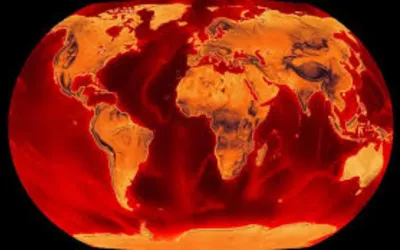
BRUSSELS: The growing intensity of the El Niño climate phenomenon could make 2026 the hottest year on record, while scientists warn that 2027 could also see new global temperature records.
According to AFP, the European Union’s Copernicus Climate Change Service reported that sea surface temperatures in a key part of the Pacific Ocean, known as Niño 3.4, reached 29.70 degrees Celsius in September. The reading exceeded the highest levels recorded during the powerful El Niño events of 1982-83, 1997-98 and 2015-16.
Carlo Buontempo, director of Copernicus, told AFP that the El Niño emerging in June this year was unusual, although it was too early to determine whether it would become the strongest on record.
He said climate change had already raised ocean temperatures, making it more difficult to compare the current event with previous El Niño episodes. According to Copernicus, a new assessment method has not yet established that the current event is stronger than earlier ones, although its intensity is significant.
Japan’s meteorological agency also said last Friday that El Niño had reached record intensity.
What is El Niño and how does it increase temperatures?
El Niño is a natural climate phenomenon characterised by warmer-than-normal sea surface temperatures in the equatorial Pacific Ocean. It can alter weather patterns worldwide, increasing the risk of drought in some regions and heavy rainfall and flooding in others.
The phenomenon can also amplify the effects of global warming caused by human activities, contributing to higher global temperatures.
According to Copernicus, the global average sea surface temperature reached 21.05 degrees Celsius in September, exceeding the previous September record of 20.92 degrees set in 2023.
Following record warmth in August, September was the second-warmest September on record globally, with the average near-surface air temperature reaching 16.27 degrees Celsius.
Why 2027 could be even hotter
Scientists say El Niño’s influence on global temperatures often becomes more pronounced in the year following its peak, as heat accumulated in the Pacific Ocean is released into the atmosphere.
The phenomenon typically occurs every two to seven years and generally lasts between nine and 12 months.
Buontempo said historical patterns suggested that 2027 could set new global temperature records following the expected heat in 2026. However, the eventual outcome would depend on the future intensity of El Niño and other climate factors.
Scientists have warned that the combination of El Niño and human-driven climate change could increase the risks of extreme heat, drought and flooding in different parts of the world.