WASHINGTON: A U.S. military operation against a Chinese ship was nearly launched after an AI chatbot generated false intelligence about the vessel’s cargo during the war with Iran.
The error was discovered only after military aircraft were in the air and armed personnel were preparing to board the ship, according to sources familiar with the incident.
The intelligence report circulated within the U.S. military during the spring as the war with Iran was underway. It claimed the Chinese vessel was carrying components linked to a nuclear weapons program.
The report originated with an analyst working for a U.S. special operations command. The analyst used a chatbot to analyze information about the ship, combining open-source material with classified signals intelligence.
The chatbot incorrectly identified the vessel’s cargo. The analyst then used the AI tool again to turn the findings into a formal intelligence report, which was distributed through military channels.
It remains unclear what the ship was actually carrying.
The report prompted the U.S. military to prepare an operation to intercept the vessel, according to four sources familiar with the episode.
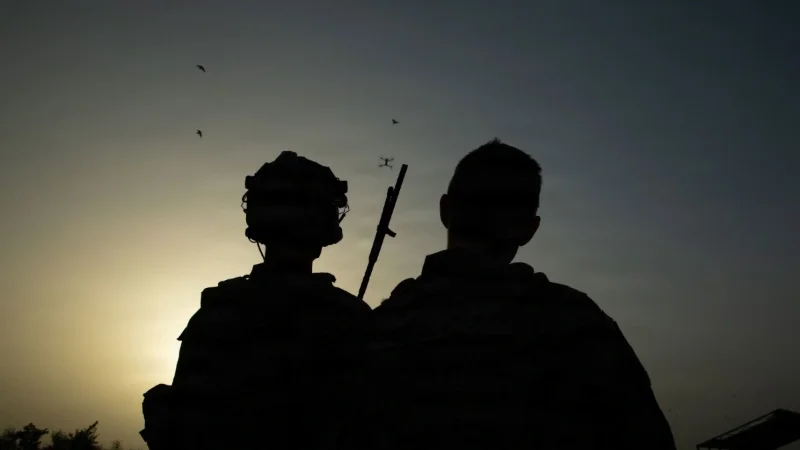
Two sources said armed U.S. personnel were preparing to board the ship, while military aircraft were already in the air.
Officials examined the underlying intelligence shortly before the planned operation and discovered that the chatbot had misidentified the cargo. The operation was subsequently called off.
One source described the report as “entirely false” and said it “almost started a war,” underscoring the potential consequences of a U.S. military operation against a Chinese vessel.
The incident comes as the U.S. military and intelligence community expand their use of artificial intelligence for intelligence analysis, targeting, logistics, budgeting and other operations.
The Pentagon has promoted AI as a way to process large amounts of information and help commanders make decisions more quickly. U.S. officials have also argued that accelerating AI adoption is necessary to maintain a technological advantage over China and other potential adversaries.
Defense Secretary Pete Hegseth announced an Artificial Intelligence Acceleration Strategy in January to expand AI use across the Defense Department and reduce barriers to experimentation.
The strategy calls for AI models to be made available across the department to civilian and military personnel working with information at different classification levels.
The incident has raised concerns about how AI-generated intelligence is verified before reaching military officials responsible for decisions involving the use of force.
Several officials familiar with the military’s AI programs said different parts of the government use different systems, rules and safety standards. There is no single framework for independently verifying information generated by those tools across the military and intelligence community.
Experts have warned that AI systems can produce convincing but inaccurate information, particularly when they rely on incomplete, conflicting or corrupted data.
A source familiar with current military policies said AI use in targeting is increasing, but there is no clear guidance on how human oversight can prevent civilian casualties or friendly-fire incidents.
The episode highlights a more immediate concern about military AI: humans making high-stakes decisions based on inaccurate information produced by automated systems.
The problem was summarized by one source familiar with the military’s use of AI: “AI allows you to get to a bad idea faster.”
U.S. Special Operations Command Pacific and the Pentagon did not respond to requests for comment on the reported incident.