The head of one of Gaza’s main Israeli-backed militias has been killed, marking a significant setback for Israel’s attempt to cultivate local Palestinian proxy forces against Hamas.
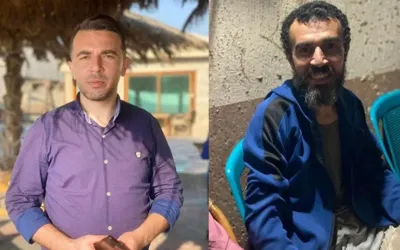
Yasser Abu Shabab, a Bedouin tribal figure who operated in the Israeli-controlled zone of the devastated enclave, reportedly died from injuries suffered during a violent confrontation with influential, heavily armed Gaza families, according to local sources and media reports.
Abu Shabab commanded the Popular Forces — the largest and best-equipped of several militias that emerged in Gaza during the later phases of the two-year conflict. These groups are widely believed to have received Israeli support as part of a strategy to weaken Hamas and exert control over parts of the population.
The timing of Abu Shabab’s death remains unclear, though it is believed to have occurred within the past two days.
In a statement, the Popular Forces said Abu Shabab was fatally shot while attempting to mediate a family dispute, dismissing as “false” claims that Hamas was involved.
However, reports circulating in Gaza, on social media, and in Israeli outlets suggested Abu Shabab—who was in his thirties and had previously been expelled from his own clan—was killed after refusing to release a hostage his men had taken from a powerful family. Relatives of the captive allegedly attacked the Popular Forces’ base, resulting in casualties on both sides. Abu Shabab was gravely wounded and later died.
A Hamas spokesperson, despite previously labeling him a collaborator and vowing to target him, denied any role in the incident.
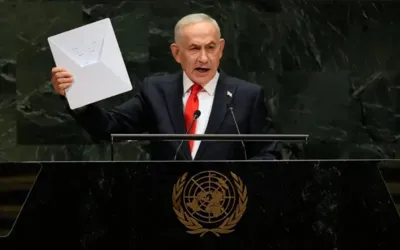
Israeli prime minister Benjamin Netanyahu acknowledged in June that Israel had armed anti-Hamas clans and factions inside Gaza. His government has yet to comment on Abu Shabab’s death.
Critics have questioned the viability of these militias, arguing they cannot realistically replace Hamas, which has held control of Gaza since 2007.
Dr. Michael Milshtein, a former Israeli military intelligence officer and Hamas expert at Tel Aviv University’s Moshe Dayan Center, said: “The outcome was predictable. Whether killed by Hamas or internal clan conflict, this was always likely.”
Other similar anti-Hamas groups have sprung up in Israeli-controlled zones of Gaza. Palestinian political analyst Dr. Reham Owda said Abu Shabab’s killing would likely heighten doubts within these factions about their ability to confront Hamas.
Hossam al-Astal, another militia leader in the Khan Younis area, had claimed in September that he and Abu Shabab represented “an alternative force to Hamas.” Astal’s current whereabouts are unknown.
Following the US-brokered ceasefire reached in October, Abu Shabab’s roughly 100 fighters continued to operate from zones held by Israeli forces. On November 18, the Popular Forces released a video showing dozens of fighters receiving orders from his deputy to conduct a sweep aimed at “clearing Rafah of terror”—a reference to Hamas fighters believed to remain in tunnels. A week later, the group claimed to have captured Hamas operatives.
Israel turned to figures like Abu Shabab after its attempts to assemble an anti-Hamas coalition of community leaders faltered in the face of harsh Hamas crackdowns against any perceived rivals inside Gaza.
Many members of the new militias had previously participated in widespread looting of aid convoys, contributing to accusations that Israel tolerated some theft of humanitarian supplies to maintain the loyalty of these groups.
Israel’s militia-building effort emerged partly from Netanyahu’s refusal to allow the Palestinian Authority—limited to parts of the occupied West Bank—to take any administrative role in Gaza. Abu Shabab’s forces worked closely with Israeli troops at controversial aid distribution sites run by the Gaza Humanitarian Foundation, a little-known US- and Israeli-backed private entity that has since been shut down.
U.S. President Donald Trump’s 20-point Gaza proposal envisions Hamas disarming and the territory being governed by a transitional authority supported by a multinational stabilization force. Progress has been minimal, with Hamas refusing to give up its weapons and no agreement yet on forming the international force.
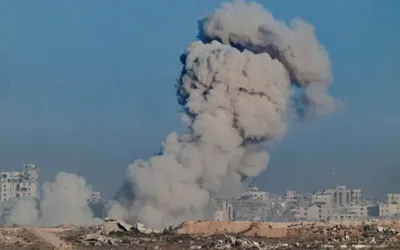
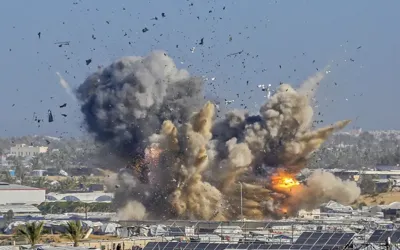
The current war began after a Hamas attack in 2023 that killed 1,200 people in Israel, mostly civilians, and resulted in the abduction of 250 others. Israel’s subsequent offensive, along with continued strikes after the ceasefire, has killed more than 70,000 Palestinians—again, mostly civilians—and left Gaza in ruins.