Oil prices fell to their lowest level in more than a week Monday as investors saw a possible opening for U.S.-Iran diplomacy at the United Nations while recovering Saudi shipments eased some concerns over regional supply disruptions.
Brent crude futures fell $2.16, or 2.08%, to $101.71 a barrel by 2:13 a.m. GMT, their lowest level since Sept. 10. U.S. West Texas Intermediate crude dropped $2.15, or 2.14%, to $98.15 a barrel. Both benchmarks had also declined in the previous session.
The decline came as markets focused on the possibility of diplomatic efforts to de-escalate the U.S.-Iran conflict during the U.N. General Assembly in New York. President Donald Trump has said he would be open to meeting Iranian President Masoud Pezeshkian, while Iran has communicated conditions for returning to negotiations, according to Iranian officials cited by international media.
“Some of the risk premium is being removed from oil prices” on hopes that a diplomatic path could emerge this week, said Tim Waterer, chief market analyst at KCM Trade.
At the same time, Middle East oil supplies have shown signs of resilience despite continuing attacks. Yemen’s Houthis have claimed missile and drone attacks on targets in Saudi Arabia, including sites in Riyadh and an Aramco facility in Yanbu.
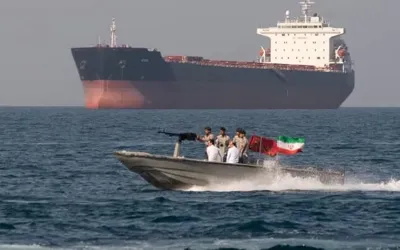
Saudi Arabia has responded to disruptions affecting its East-West pipeline by increasing crude shipments through the Strait of Hormuz. Saudi oil exports have risen to more than 4 million barrels per day so far this month, up from about 2.4 million barrels per day in August, according to provisional Kpler data.
JPMorgan analysts said Middle East oil flows remained relatively strong despite the disruptions, averaging 17.1 million barrels per day over the past 10 days. Satellite data also showed Saudi oil flows through the Strait of Hormuz averaging 2.9 million barrels per day over the past six days, compared with about 700,000 barrels per day in August.
Despite the recent decline, oil markets remain highly sensitive to developments in the Middle East. Shipping through the Strait of Hormuz has remained well below normal levels, keeping the risk of further supply disruptions in focus as diplomatic efforts and regional tensions unfold.