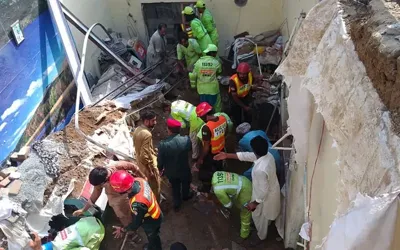
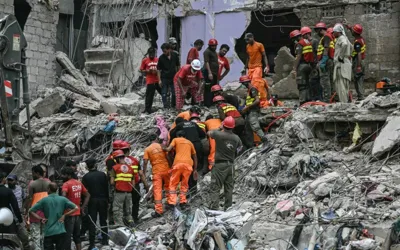
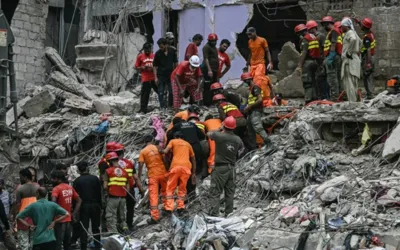
KARACHI: An under-construction building in Karachi's Admin Society in the Baloch Colony area collapsed Wednesday, burying several parked vehicles under the rubble and leaving multiple people trapped, authorities said.
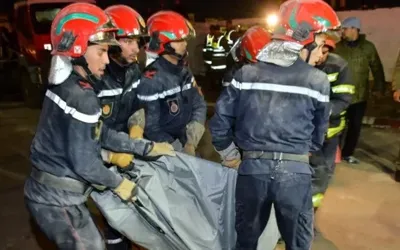
Rescue agencies rushed to the scene and began rescue operations. Three injured people were pulled from the debris of the six-storey building and taken to a hospital, while one person was found dead, according to rescue sources.
Rescue activities were ongoing as several people remained trapped under the debris.
The collapse is the latest in a series of structural failures in Pakistan's largest city. Between November 2024 and November 2026, major Pakistani news outlets and international agencies documented at least five significant full or partial building collapses in Karachi, excluding minor, non-fatal monsoon incidents. Those five collapses claimed more than 45 lives directly from structural failure, and dozens more died in a major fire-induced collapse.
Among the deadliest was the July 4, 2025, collapse of a five-story residential building in Lyari's Baghdadi area, where a 50-hour rescue operation recovered 27 bodies and rescued 10 injured survivors. The Sindh Building Control Authority had declared the 30-year-old structure hazardous as early as 2023, and eight SBCA officials and the building owner were arrested on criminal negligence charges after the tragedy.
A fire at the Gul Plaza shopping mall on M.A. Jinnah Road in January 2026 burned for nearly 36 hours and caused multiple sections of the complex to collapse, killing at least five people directly in the structural fall and contributing to a total death toll of 73 to 80.
According to official figures, 588 buildings across Karachi are classified as dilapidated and unfit for human habitation. District South accounts for the overwhelming majority — 456 buildings — with nearly 100 concentrated in Lyari alone. Another 59 structures are on the "extremely dangerous" immediate-evacuation list, though enforcement has repeatedly stalled because of the lack of state-funded alternative housing for low-income families.