Thursday, October 22, 2026
Watch Live
UPDATED
FUEL PRICE
22-OCT-2026
PETROL
▼ -2.71 PKR
Rs. 379.31/ltr
DIESEL
▲ +0.31 PKR
Rs. 390.11/ltr
Headlines
CDF Asim Munir, Maldives President Muizzu discuss defence cooperation Govt announces fresh petrol and diesel prices Indian developer turns voter roll anger into protest-themed online 'Jantar Mantar Chalo' game Kim Kardashian receives birthday wishes from Ivanka Trump with a sweet tribute Immortal jellyfish sparks new hope for scientists seeking solutions to human aging problems LPG hits Rs600 per kg as food prices surge across Pakistan Winter skin care tips to prevent dry skin, cracked lips and irritation TWICE’s Jihyo breaks from JYP after 21 years, launches new agency EMITHAUS ‘Glee’ set for comeback as fans await news of original cast Royal family pays emotional tribute to victims of Aberfan disaster Pakistan jump to fourth in ICC ODI rankings, overtake Australia France restricts movement in several cities as unrest continues ‘ Deadly drone attack on Sudan border market leaves 153 dead Pakistan, Türkiye, Qatar and Indonesia forge landmark defense ties with Badr MoU JI chief Hafiz Naeem announces sit-ins at 150 locations across Pakistan over petroleum levy Rajab Butt’s LC300 Land Cruiser seized in Lahore over fake number plate CDF Asim Munir, Maldives President Muizzu discuss defence cooperation Govt announces fresh petrol and diesel prices Indian developer turns voter roll anger into protest-themed online 'Jantar Mantar Chalo' game Kim Kardashian receives birthday wishes from Ivanka Trump with a sweet tribute Immortal jellyfish sparks new hope for scientists seeking solutions to human aging problems LPG hits Rs600 per kg as food prices surge across Pakistan Winter skin care tips to prevent dry skin, cracked lips and irritation TWICE’s Jihyo breaks from JYP after 21 years, launches new agency EMITHAUS ‘Glee’ set for comeback as fans await news of original cast Royal family pays emotional tribute to victims of Aberfan disaster Pakistan jump to fourth in ICC ODI rankings, overtake Australia France restricts movement in several cities as unrest continues ‘ Deadly drone attack on Sudan border market leaves 153 dead Pakistan, Türkiye, Qatar and Indonesia forge landmark defense ties with Badr MoU JI chief Hafiz Naeem announces sit-ins at 150 locations across Pakistan over petroleum levy Rajab Butt’s LC300 Land Cruiser seized in Lahore over fake number plate

ISS study reveals viruses behave differently in space

Findings could help develop more effective treatments for antibiotic-resistant infections

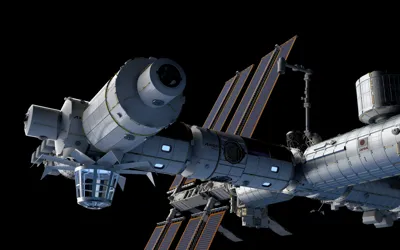
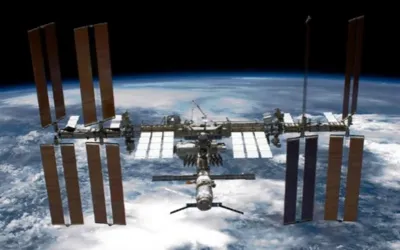
A study conducted aboard the International Space Station (ISS) has found that bacteria-infecting viruses behave differently in microgravity, a discovery that could help scientists develop new ways to combat drug-resistant infections.

Research published in PLOS Biology shows that bacteriophages viruses that target bacteria are still able to infect E. coli in near-weightless conditions.

However, both the infection process and the viruses’ evolutionary behavior differ significantly from what is observed on Earth.

The study, led by Phil Huss of the University of Wisconsin Madison, compared E. coli cultures infected with the T7 bacteriophage on Earth and aboard the ISS.

While infection in space was initially slower, the virus ultimately replicated successfully. Genetic analysis revealed that both the bacteria and the viruses developed unique mutations in the space environment.

Researchers discovered that viruses grown on the space station underwent changes in the protein they use to attach to bacteria, improving their ability to bind to bacterial cells.

At the same time, E. coli grown in space developed mutations that increased their resistance to viral attacks and enhanced their survival in microgravity.

Advanced genetic sequencing identified the specific mutations responsible for these changes. Follow-up experiments on Earth confirmed that these space-altered viruses were more effective against E. coli strains linked to human urinary tract infections, including strains typically resistant to the T7 virus.

The findings demonstrate that space-based research offers critical insights beyond understanding microbial adaptation.

Scientists concluded that microgravity reshapes virus–bacteria interactions, driving evolutionary changes that could be harnessed to engineer more powerful treatments against antibiotic-resistant bacteria on Earth.
Recommended