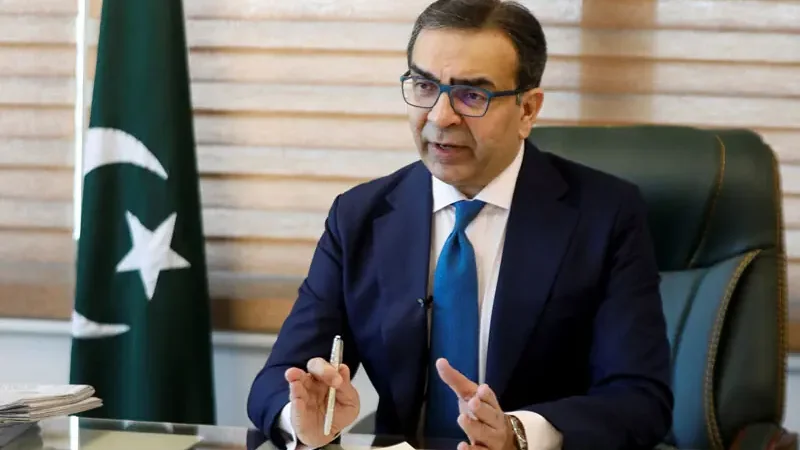
ISLAMABAD: The adviser to the prime minister on privatisation called for a strategic shift from economic stabilisation toward long-term growth, saying stability is only a launchpad for sustainable development.
Muhammad Ali, who also chairs the Privatisation Commission and the Public Private Partnership Authority, spoke Wednesday at the Leaders in Islamabad Business Summit 2026 under the theme “The Next Move — Pakistan’s Next Phase of Growth, Investment and Competitiveness.”
Ali highlighted recent macroeconomic gains achieved through what he described as tough decisions, and said Pakistan must build market competitiveness through innovation, enable the private sector and develop a credible public policy framework.
He said the country needs an altered relationship between the state and the private sector to support a population projected to reach 390 million by 2050. The state must lead, regulate, partner, enable and strategically exit sectors where private enterprise can provide better value, he said.
Ali defined privatisation not simply as a transfer of ownership but as a mechanism to unlock latent economic value constrained by traditional management. He said lessons from the complex Pakistan International Airlines transaction will guide future privatisations and bankable public-private partnership pipelines to deliver advanced infrastructure and services.
The adviser outlined three structural shifts he said are required for Pakistan’s economic renewal:
- Changing how the country grows: transitioning from consumption and external financing to investment, productivity and private capital.
- Building productive scale: prioritising innovation in industry, fusing industrialisation with modern technologies such as artificial intelligence, robotics and electric vehicles while expanding workforce participation, particularly for women.
- Competing with the world: reorienting local businesses to build productive businesses at scale with the capacity to compete internationally.
Concluding his address, Ali warned that potential alone is not a strategy. He urged leaders to think across generations and capitalise on the current stability window to build a highly competitive and productive Pakistan for 2050.