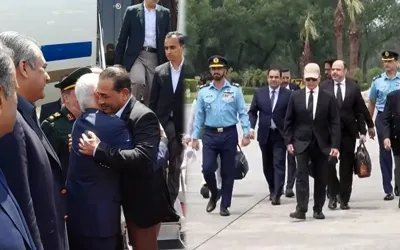
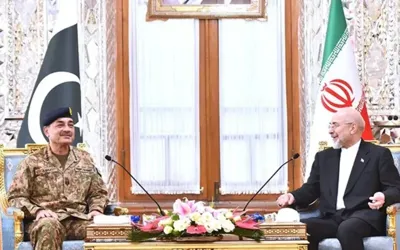
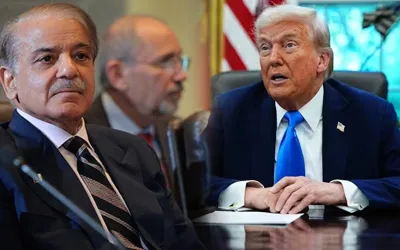
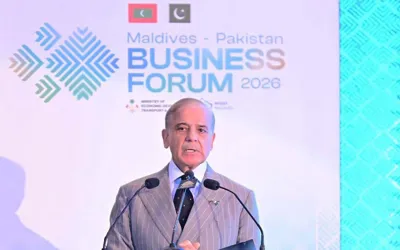
ISLAMABAD: Prime Minister Shehbaz Sharif and Field Marshal Asim Munir, chief of the armed forces and army chief, jointly secured the top position in the 2027 edition of “The Muslim 500: The World’s 500 Most Influential Muslims,” sharing the ranking with Saudi King Salman bin Abdulaziz, Crown Prince Mohammed bin Salman and Turkish President Recep Tayyip Erdogan.
The annual publication, compiled by the Royal Islamic Strategic Studies Centre in Amman, Jordan, said it was the first time multiple individuals had jointly held the top spot. It attributed the shared ranking to the Makkah Joint Defence Agreement among Pakistan, Saudi Arabia and Turkey.
“This unified top spot features five individuals; it is actually divided into three shared entries that represent a massive shift in how Muslim nations are working together to protect one another,” the publication said. “The main reason for this historic decision is the Makkah Joint Defence Agreement.”
The publication said the mutual-defence pact was signed Aug. 7, 2026, and activated during an emergency summit in Riyadh. It described the agreement as uniting Saudi Arabia’s wealth, Turkey’s advanced technology and manufacturing, and Pakistan’s military strength into a collective alliance.
“Modelled on a ‘one for all, all for one’ approach to security, this pact has completely reshaped regional politics,” it added.
Iran’s Supreme Leader Ayatollah Mojtaba Khamenei ranked fourth, followed by Jordan’s King Abdullah II at fifth. Qatar’s Emir Sheikh Tamim bin Hamad Al Thani was sixth, and Pakistani religious scholar Sheikh Muhammad Taqi Usmani ranked seventh.
UAE President Sheikh Mohamed bin Zayed Al Nahyan was ranked 12th, Egyptian President Abdel Fattah el-Sisi 22nd and Pakistani religious scholar Maulana Tariq Jameel 32nd. Footballer Mohamed Salah placed 39th, Palestinian President Mahmoud Abbas 45th and New York City Mayor Zohran Mamdani 49th.
The report also highlighted Pakistan’s economic and diplomatic challenges over the past year, noting the country had navigated economic stabilization efforts, regional security pressures and diplomatic balancing between major powers.